Living Altar · Chapel
살아있는 제대 · 성체조배실
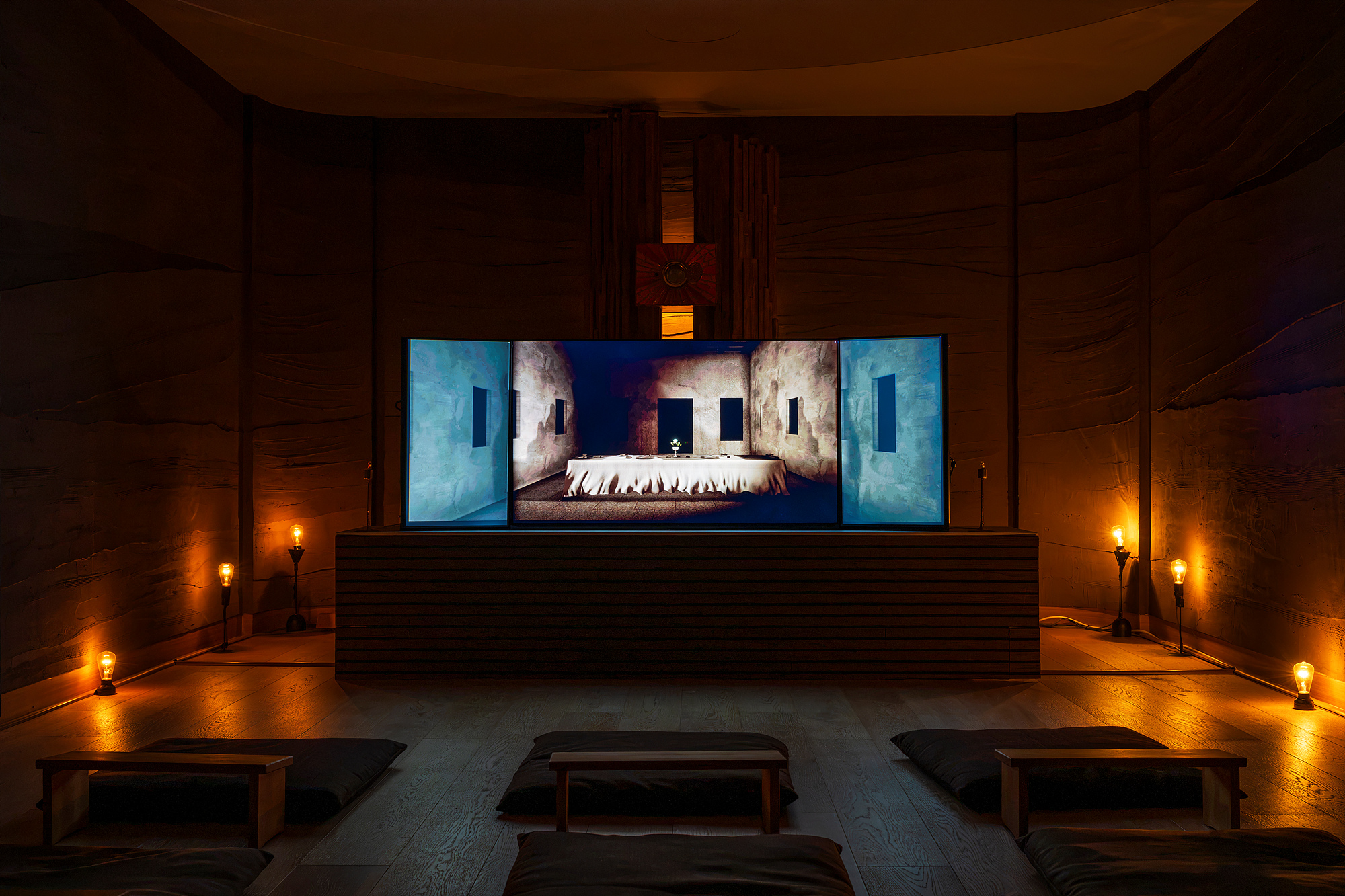
세 화면과 실제 조명이 7분 30초의 시간을 구성한다. 손의 몸짓과 그림자, 천의 움직임이 이어지다가 영상과 소리와 빛이 멈춘다. 그 뒤에 관객이 머무는 방이 남는다.
Three screens and physical lighting compose a duration of seven minutes and thirty seconds. Hand gestures, shadows and moving cloth unfold until image, sound and light cease. The room in which the viewer remains is left behind.
다시 움직이는 손
그리는 손, 연주하는 손, 타인의 손을 잡는 행위는 내 작업의 출발점이었다. 손목의 부상은 이 몸짓들을 더 이상 당연한 조건으로 받아들일 수 없게 했다.
손목 수술 뒤 작업을 멈춘 시간을 지나, 《살아있는 제대》를 제작했다. 다시 움직이는 손을 촬영하고, 그 몸짓을 세 화면과 실제 빛의 변화로 연결했다. 몸의 경험을 이미지로 옮기는 일과, 이미지가 대신할 수 없는 몸의 차이가 이 작업의 출발점이 되었다.
Hands moving again
Drawing, playing an instrument and taking another person’s hand have been starting points for my practice. A wrist injury made it impossible to take these gestures for granted.
I made Living Altar after a period away from making following wrist surgery. I filmed the hand moving again and connected its gestures to three screens and changes in physical light. The difference between a bodily experience and an image that cannot replace it became a point of departure.
빛을 빌려 오는 방
서울 우면동성당 성체조배실의 세 화면은 기존 감실 아래, 같은 수직축을 따라 놓인다. 영상이 들어서기 전부터 존재하던 방의 구조와 관람의 방향이 설치의 조건이 된다.
화면 속 손짓에 따라 나뭇가지의 초와 달이 나타나고, 실제 공간의 두 램프가 켜진다. 빛은 화면 안에 머물지 않고 바닥과 벽, 물체의 표면으로 옮겨 간다. 관객의 시선도 그 이동을 따라 이미지와 방 사이를 오간다.
A room of borrowed light
In the Eucharistic Adoration Chapel at Umyeon-dong Parish in Seoul, the three screens sit beneath the existing tabernacle on the same vertical axis. The room’s prior structure and direction of attention form conditions for the installation.
Candles on branches and a moon appear in response to filmed gestures, while two lamps in the actual room light up. Light moves from the screen to the floor, walls and surfaces of objects. The viewer’s attention moves with it between the image and the room.
내어주는 손과 응답하는 손
만찬의 인물들은 그림자로 나타난다. 빵과 잔을 들어 올리는 손은 사제의 몸짓을 촬영한 것이다. 특정 장소에서 반복되어 온 행위가 영상의 시간으로 옮겨지며, 기록된 몸짓과 지금의 공간이 겹친다.
이어지는 장면의 손은 나의 손이다. 화면 속 손의 움직임, 조명의 변화, 심장박동의 소리는 각각 다른 매체로 남으면서 같은 시간을 구성한다. 한 몸의 이미지는 세 화면과 방 안의 빛에 분산된다.
Hands that give and hands that respond
The figures at supper appear as shadows. The hands lifting bread and a cup are filmed gestures of a priest. An action repeated within a particular place enters the time of the moving image; the recorded gesture and the present space overlap.
The hand in the following scene is my own. Its movement, changes in lighting and the sound of a heartbeat remain distinct media while composing a shared duration. The image of a body is distributed across three screens and light within the room.
열두 초의 침묵
큰 심장박동 하나와 함께 영상과 조명과 소리가 멈춘다. 열두 초 동안 작품은 아무것도 보여주거나 들려주지 않는다. 이 중단은 다음 장면을 기다리는 시간이면서 관객이 자신이 서 있는 방을 다시 감각하는 간격이다.
종소리와 함께 천이 떠오르고 빈 돌이 드러난다. 바닥과 제대, 감실을 비추는 빛이 차례로 돌아온다. 같은 장소가 다시 나타나지만, 몸을 기대했던 시선은 이제 그 몸이 없는 자리를 바라본다.
Twelve seconds of silence
One great heartbeat is followed by the cessation of image, light and sound. For twelve seconds the work shows and sounds nothing. This interruption is both a wait for what follows and an interval in which viewers can register the room they occupy.
A bell sounds, the cloth rises and bare stone appears. Light returns in sequence to the floor, altar and tabernacle. The same place becomes visible again, but a gaze that expected a body now meets the place of its absence.
이미지가 물러나는 자리
마지막에 방의 밝기가 고조되고 달이 다시 나타난다. 이내 영상과 다른 조명이 함께 꺼지고, 기존 감실을 비추는 빛만 남는다. 열두 초의 침묵이 다시 시작하기 위한 중단이었다면, 이번에는 영상이 장소에서 물러난다.
이 일식의 구조에서 가려지는 것은 실제 장소가 아니라 그것을 대신하려는 이미지다. 보여주는 장치가 작동을 멈출 때, 관객은 표현된 공간에서 자신이 몸으로 머무는 공간으로 주의를 옮긴다.
내가 위로하고 싶었던 어머니가 잃은 것은 몸이었다. 어떤 이미지도 그 몸을 돌려주거나 재회를 이루지 못한다. 작업은 그 한계를 해결했다고 말하는 대신, 이미지를 멈추고 빈자리를 남긴다.
Where the image withdraws
At the end, the room grows brighter and the moon returns. The images and other lights then go out, leaving only the light on the existing tabernacle. The earlier silence was an interruption before a restart; this time the moving image withdraws from the place.
In this structure of an eclipse, it is the image’s claim to replace a place that recedes. When the apparatus of display stops, attention shifts from represented space to the space in which the viewer’s body remains.
What the mother I wished to console had lost was a body. No image can return that body or accomplish a reunion. The work does not claim to resolve this limit. It stops the image and leaves the place unfilled.
Acknowledgements
This work was never made alone. My deepest gratitude to all who prayed alongside and lent their hands until a single breath of video came to be.
Overall Advisor · Fr. Stephan Baek Woon-cheol
Supervision · Fr. Paul Shin Ji-cheol
Planning · Lucia Han Ji-yeon
Sound Design · Anna Ahn Eun-jeong
Green Screen Hand Filming · Paul Lee Young-hoon
Installation · Jang Jae-il
My heartfelt thanks to everyone at the parish who offered their help.
And above all, to each visitor who will stand before this work and respond in silence — thank you.
감사의 말
이 작품은 결코 홀로 이루어지지 않았습니다. 한 호흡의 영상이 되기까지 함께 기도하고 손을 보태어 주신 모든 분들께 깊이 감사드립니다.
총괄 자문 · 백운철 스테파노 신부님
감수 · 신지철 바오로 신부님
기획 · 한지연(루시아)
사운드 디자인 · 안은정(안나)
그린스크린 손 촬영 · 이영훈(바오로)
설치 · 장재일
도움을 주신 성당 모든분들께 깊은 감사를 드립니다.
무엇보다, 이 작품 앞에 머물러 침묵으로 응답해 주실 관람자 여러분께 감사드립니다.
이미지가 멈춘 뒤, 공간에 머무는 시간.After the image stops, time spent in the space.