
Living Altar · Chapel
살아있는 제대 · 성체조배실
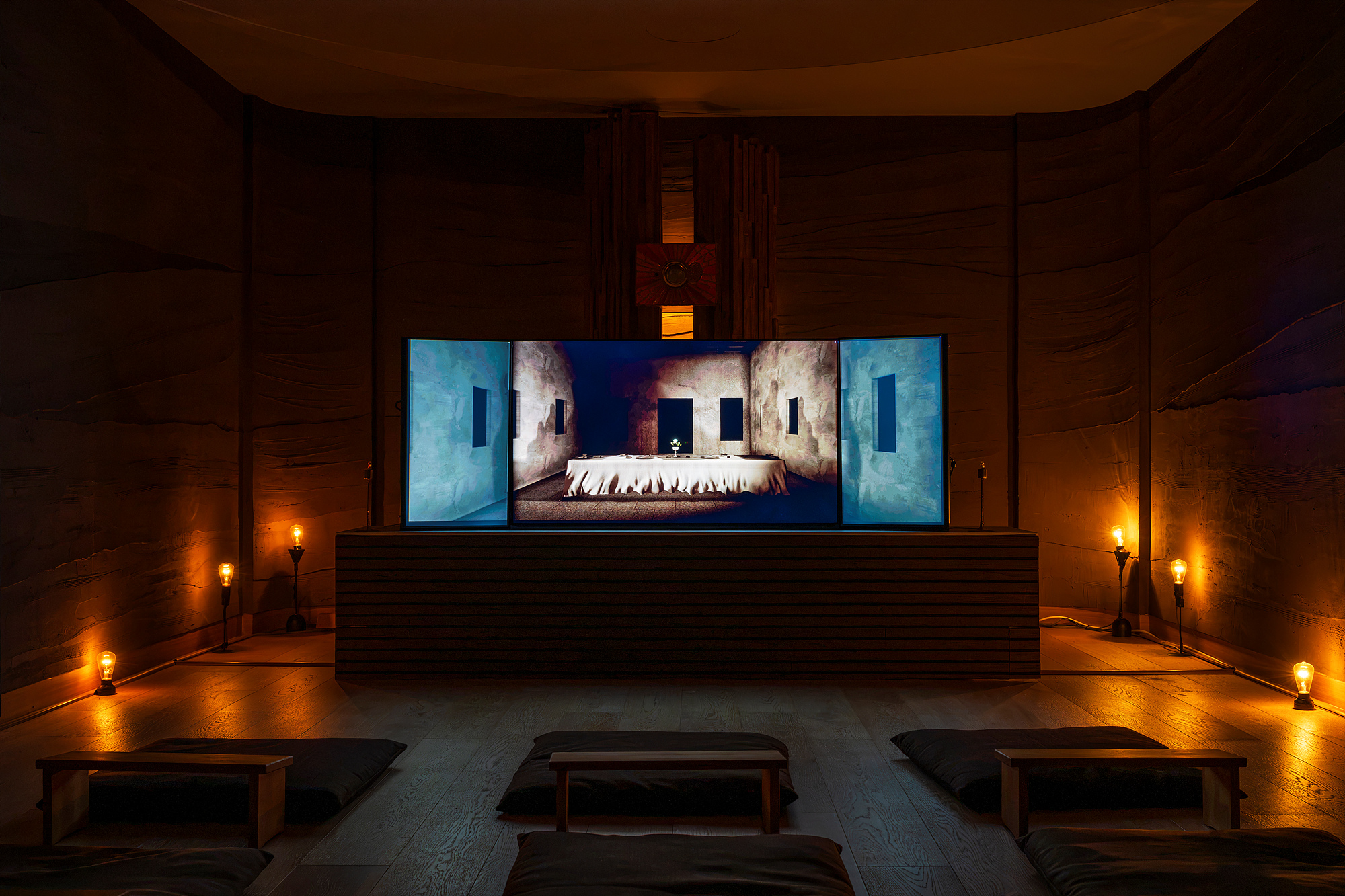
성체 아래에 세 화면을 놓았다. 7분 30초 동안 만찬과 수난과 부활이 펼쳐지고, 마지막에는 작품의 영상과 소리와 빛이 물러난다. 성체가 남는다.
I placed three screens beneath the Eucharist. Over seven minutes and thirty seconds, the Supper, Passion and Resurrection unfold. At the end, the work withdraws its image, sound and light. The Eucharist remains.
돌려받은 손
이냐시오 영신수련 중 아브라함과 이사악을 관상하다가, 나는 내 손이 나의 이사악임을 알아들었다. 그리고 만지고 연주하는 손, 내 예술의 전부인 손이었다. 그리스도를 찬미하기 위해 쓰던 예술을 어느 순간 그분보다 위에 두고 있었다. 손을 내어드린다는 것은 예술을 버리는 일이 아니라, 그 자리를 다시 정하는 일이었다.
손목 수술 뒤 오랫동안 작업을 멈추었다. 《살아있는 제대》는 다시 만들기 시작하며 제작한 첫 작품이다. 돌려받은 손으로 만든 세 화면을 성체 아래에 놓았다. 이 배치에서 작업의 물음이 시작된다. 예술은 성체 앞에서 무엇을 할 수 있으며, 어디에서 자신의 수단을 거두는가.
The hands returned to me
During the Spiritual Exercises of Ignatius, while contemplating Abraham and Isaac, I came to understand my hands as my Isaac. These were the hands with which I drew, touched and played music: the whole of my art. In making art to praise Christ, I had at some point placed it above him. Offering my hands meant not abandoning art but reconsidering its place.
After wrist surgery, I was unable to work for a long time. Living Altar was the first work I made when I began again. I placed the three screens made with these returned hands beneath the Eucharist. That arrangement gives the work its question: what can art do before the Eucharist, and where must it withdraw its own means?
빛을 빌려 오는 방
서울 우면동성당 성체조배실에서 성체는 감실의 둥근 창 안에 현시되어 있다. 세 화면은 그 아래 제대 위에, 같은 수직축을 따라 놓인다. 작품은 성체를 가리지 않는다. 영상이 시작되기 전부터 성체는 그곳에 있다.
천사의 손짓에 나뭇가지의 초가 켜지면 성체를 비추던 조명이 꺼지고 화면에 달이 떠오른다. 나무의 불은 타되 소진되지 않는 떨기가 되고, 영상 속 손짓에 실제 제대의 두 램프가 켜진다. 빛은 방에서 이미지로, 다시 이미지에서 방으로 건너간다. 내가 구성한 것은 현존 자체가 아니라, 그 앞에서 보고 듣는 조건이다.
A room of borrowed light
In the Eucharistic adoration chapel at Umyeon-dong Parish in Seoul, the Eucharist is exposed within a round window in the tabernacle. The three screens stand on the altar beneath it, along the same vertical axis. They do not obscure it. The Eucharist is there before the images begin.
At an angel’s gesture, candles on the branches light up. The light illuminating the Eucharist goes out, and a moon appears on screen. The tree becomes a bush that burns without being consumed; a gesture within the image brings light to the two lamps on the actual altar. Light passes from the room into the image and back again. What I composed was not presence itself, but the conditions of seeing and hearing before it.
내어주는 손과 응답하는 손
만찬의 인물들은 그림자로 나타난다. 과거의 만찬과 지금의 미사 사이에서 시간은 한쪽으로 닫히지 않는다. 사제의 손을 촬영한 두 손이 빵과 잔을 들어 올리고, 제정사의 말씀이 라틴어 음성과 한국어 글자로 전해진다. 작품은 그 말씀을 인용한다. 화면의 손이 빵을 축성하는 것은 아니다.
수난에서 채찍 아래 놓인 손은 나의 손이다. 먼저 내어주시는 그리스도의 손과, 그것을 받아 만들고 응답하는 나의 손은 같은 자리를 차지하지 않는다. 채찍은 조명의 움직임이 되고 못은 소리가 되며, 심장박동은 방의 빛을 뛰게 한다. 나는 수난을 화면 속 사건에만 머물게 하지 않고 방 안으로 옮기고자 했다. 그러나 감각의 강도가 신앙이나 위로를 보장하지는 않는다.
Hands that give and hands that respond
The figures at supper appear as shadows. Time remains open between the Last Supper and the Mass of the present. Two filmed hands of a priest raise the bread and cup, while the words of institution are heard in Latin and read in Korean. The work quotes those words. The hands on screen do not consecrate the bread.
The hand beneath the scourge is my own. Christ’s hands, which give first, and my hands, which receive, make and respond, do not occupy the same place. The scourge becomes movement in the lighting; the nail becomes sound; the heartbeat makes the room’s light pulse. I wanted to carry the Passion beyond the screen into the room. Yet sensory intensity cannot guarantee faith or consolation.
열두 초의 침묵
“다 이루었다” 뒤, 큰 심장박동 하나와 함께 영상과 조명과 소리가 멈춘다. 열두 초 동안 작품은 더 이상 아무것도 보여주거나 들려주지 않는다. 나는 이 시간을 성토요일의 침묵으로 구성했다. 죽음을 또 하나의 이미지나 설명으로 채우지 않기 위한 중단이다.
종소리와 함께 수의가 떠오르고 빈 무덤이 드러난다. 천사의 손짓이 돌아오면 바닥의 빛, 제대의 빛, 성체를 비추는 빛이 차례로 돌아온다. “나를 기억하여 이를 행하여라”는 말씀과 함께 무덤은 제대의 형상으로 바뀐다. 다시 켜지는 빛은 사라진 현존을 회복시키지 않는다. 처음부터 그곳에 있던 성체를 다시 비춘다.
Twelve seconds of silence
After “It is accomplished,” one great heartbeat is followed by the cessation of image, light and sound. For twelve seconds the work offers nothing to see or hear. I composed this interval as the silence of Holy Saturday: a pause that does not fill death with another image or explanation.
A bell sounds, the burial cloth rises, and the empty tomb appears. As the angel’s gesture returns, light comes back to the floor, then the altar, then the Eucharist. With “Do this in memory of me,” the tomb takes the form of an altar. The returning light does not restore an absent presence. It illuminates the Eucharist that was there all along.
성체적 일식
마지막에 방의 밝기가 고조되고 달이 다시 나타난다. 이내 영상과 다른 조명이 함께 꺼지고, 성체를 비추는 빛만 남는다. 열두 초의 침묵이 다시 시작하기 위한 중단이었다면, 이번에는 상영 자체가 끝난다. 밝혀진 성체 아래에 어두운 세 화면이 남는다.
나는 이 관계를 ‘성체적 일식’이라 부른다. 성체가 물리적으로 가려진다는 뜻이 아니다. 물러나는 것은 예술의 가치가 아니라, 자신의 표현으로 그 표현이 가리키는 실재를 모두 담거나 대신할 수 있다는 주장이다. 작품은 만들고, 방을 채우고, 자신에게 속한 빛과 소리를 거둔다.
내가 위로하고 싶었던 어머니가 잃은 것은 몸이었다. 어떤 이미지도 그 몸을 돌려주거나 재회를 이루지 못한다. 이 작업은 슬픔을 해결했다고 말할 수 없다. 다만 자신이 해결할 수 없는 고통 앞에 머물며, 성체 앞에서 자기 표현이 끝나는 자리를 구성한다. 성체는 작품이 시작되기 전에 거기 있었고, 작품이 멈춘 뒤에도 거기 있다.
Eucharistic eclipse
At the end, the room grows brighter and the moon returns. The images and other lights then go out together, leaving only the light upon the Eucharist. The twelve-second silence had been a pause before a new beginning; this is the end of the presentation. Beneath the illuminated Eucharist, three dark screens remain.
I call this relationship an “Eucharistic eclipse.” It does not mean that the Eucharist is physically obscured. What withdraws is not the value of art, but its claim to contain or replace the reality to which it points. The work makes, fills the room, and gathers back the light and sound that belong to it.
What the mother I wished to console had lost was a body. No image can return that body or accomplish the reunion she longs for. This work cannot claim to have resolved grief. It remains before suffering it cannot resolve, and composes the point at which its own expression ends before the Eucharist. The Eucharist was there before the work began, and is there after it stops.
Acknowledgements
This work was never made alone. My deepest gratitude to all who prayed alongside and lent their hands until a single breath of video came to be.
Overall Advisor · Fr. Stephan Baek Woon-cheol
Supervision · Fr. Paul Shin Ji-cheol
Planning · Lucia Han Ji-yeon
Sound Design · Anna Ahn Eun-jeong
Green Screen Hand Filming · Paul Lee Young-hoon
Installation · Jang Jae-il
My heartfelt thanks to everyone at the parish who offered their help.
And above all, to each visitor who will stand before this work and respond in silence — thank you.
감사의 말
이 작품은 결코 홀로 이루어지지 않았습니다. 한 호흡의 영상이 되기까지 함께 기도하고 손을 보태어 주신 모든 분들께 깊이 감사드립니다.
총괄 자문 · 백운철 스테파노 신부님
감수 · 신지철 바오로 신부님
기획 · 한지연(루시아)
사운드 디자인 · 안은정(안나)
그린스크린 손 촬영 · 이영훈(바오로)
설치 · 장재일
도움을 주신 성당 모든분들께 깊은 감사를 드립니다.
무엇보다, 이 작품 앞에 머물러 침묵으로 응답해 주실 관람자 여러분께 감사드립니다.
오직 성체
이 성체 앞에 잠시 머무시기를 청합니다.Only the Eucharist
Please remain for a moment before the Eucharist.